Other
Aim & Scope
Aims and Scope
Genel Tıp Dergisi/Genel Tıp Journal (GTD) is an international peer-reviewed journal. Genel Tıp Journal publishes research that addresses the needs and goals of contemporary medicine. GTD is an international Open Access journal devoted to publishing peer-reviewed, high quality, original papers in the field of medical science. GTD is published bimonthly by Selcuk University, School of Medicine. Each peer-reviewed article that is published in a GTD is universally and freely accessible via the Internet in an easily readable and printable PDF format. GTD publish the following article types: original research articles, reviews, case reports and letters. The language of the Journal is English. Genel Tıp Journal has been published since 1988.
The editorial and publication processes of the journal are shaped in accordance with the guidelines of the International Committee of Medical Journal Editors (ICMJE), World Association of Medical Editors (WAME), Council of Science Editors (CSE), Committee on Publication Ethics (COPE), European Association of Science Editors (EASE), and National Information Standards Organization (NISO). The journal is in conformity with the Principles of Transparency and Best Practice in Scholarly Publishing (doaj.org/bestpractice).
Processing and publication are free of charge with the journal. No fees are requested from the authors at any point throughout the evaluation and publication process. All manuscripts must be submitted via the online submission system which is available at https://dergipark.org.tr/tr/journal/3567/submission/step/manuscript/new The journal guidelines, technical information, and the required forms are available on the journal’s webpage.
Open Access Policy
“Open Access” is a catch-all term covering both Gratis and Libre Open Access. For DOAJ, Open Access is only when digital content is freely available online AND user rights and the terms of copyright are defined.
Genel Tıp Dergisi provides immediate open access to its content on the principle that making research freely available to the public supporting a greater global exchange of knowledge.
By “open access” to (peer-reviewed research literature), we mean its free availability on the public internet, permitting any users (readers, libraries, institutions and organisations) to read, download, copy, distribute, print, search, or link to the full texts of these articles, crawl them for indexing, pass them as data to software, or use them for any other lawful purpose, without financial, legal, or technical barriers.
Genel Tıp Dergisi publishes all articles under the open access model, defined under Budapest, Berlin, and Bethesda open access declarations. The full content of the articles is freely available for anyone without any charges are other restrictions.
Open Access is a true un-restricted exchange of ideas and science.
Open access publishing benefits you in both your roles as an author and as a reader. The advantages of open access are:
All published articles are freely available to all readers, in any part of the world. Free availability of your work published under open access means more citations for your articles and increased impact of your work.
Authors also benefit from work of other researchers published under open access. They are free to download and read their work and this provides you with the latest, peer-reviewed research information without charges.
Everyone in the academic community has immediate and free access to the results of your research.
The articles published under open access are fully citable.
Editor in Chief: İnci KARA, Prof. Dr.
Address: Alaeddin Keykubat Campus, Selcuklu, Konya-TURKIYE
Publisher: Selcuk University, Faculty of Medicine
Phone: + 90 332 224 43 19
E-mail: geneltip@selcuk.edu.tr
Author Guidelines
Author Guidelines
Note that submission implies that the content has not been published or submitted for publication elsewhere except as a brief abstract in the proceedings of a scientific meeting or symposium. Once you have prepared your submission in accordance with the Guidelines, manuscripts should be submitted online at https://dergipark.org.tr/tr/journal/3567/submission/step/manuscript/new
A separate title page should be submitted with all submissions and this page should include (The title should be short and informative, containing major keywords related to the content. The title should not contain abbreviations): Turkish and English title, short title, name-surname, qualifications, affiliations, affiliation addresses, e-mail and *Orcid ID. The name, address, email address and telephone number of the corresponding author should be clearly indicated separately on the title page. The journal operates a double-blind peer review policy, so please ensure that identifying information is only included in the title page file, and that the separate 'Main Document' file is anonymised.
GTD requires structured abstracts for all original articles. The following headlines should be used where appropriate: Objective, Design, Subjects/Patients, Methods, Results, and Conclusion. Please make sure the abstract provides an answer to the aim of the study, and that the total number of words does not exceed 200. A list of from 4-8 key-words or terms from Medical Subject Headings (MeSH) https://www.nlm.nih.gov/mesh/MBrowser.html suitable for indexing terms should be typed at the bottom of the abstract page.
References
Using numbers in text
A reference gives the full details of the brief citation you have referred to in text and is shown at the end of your essay. A reference will include authors, titles, editions, publisher details and journal details If the work has six authors or fewer, list all of them. If there are more than six authors, list the first six authors followed by et al. The style of references must follow the Vancouver system, and for the abbreviations of journal titles: please consult the Journals database, hosted at https://www.ncbi.nlm.nih.gov/nlmcatalog/journals/
(CLICK for the GTD EndNote output style)
Example list of references
We recommend that the open researcher and contributor ID (ORCID) of all authors to be provided. For an ORCID, authors should register at the ORCID web site available from https://orcid.org/register Registration is free to every researcher in the world.
Revision
Authors should mark the changes they made in the main text in color while submitting the article revision files. The responses to the referees should be specified in a separate Word file.
Copyright Transfer Form
All manuscripts must be accompanied by the Copyright Transfer Form. This form must be signed by all authors in the order of their names on the title page. By signing the form, authors declare that the manuscript and the data in it have not been submitted elsewhere or previously published and approve scientific contributions and responsibilities of all authors.
The Ethics Committee Approval Document
All manuscripts must be accompanied by the ethics committee approval document.
Ethical Principles and Publication Policy
Information for Authors
The Editorial Process
A manuscript will be reviewed for possible publication with the understanding that it is being submitted to GTD alone at that point in time and has not been published anywhere, simultaneously submitted, or already accepted for publication elsewhere. GTD relies on a strong editorial and peer review process to select manuscripts for publication. On submission, editors review all the submitted manuscripts initially for suitability for a formal review.
Manuscripts with insufficient originality, serious scientific or technical flaws, or lack of a significant message may be rejected before proceeding for a formal peer-review. Manuscripts that are unlikely to be of interest to the GTD readers are also liable to be rejected at this stage itself. The journal expects that authors would authorize one of them to correspond with the Journal for all matters related to the manuscript.
All manuscripts received are duly acknowledged and given a Manuscript Number. When submitting a manuscript, authors will be asked to suggest 3 peer reviewers and provide their contact information. Authors are encouraged to select reviewers who have expertise in the topic of study and are well-versed in the aspects of the methods presented. Manuscripts that are found suitable for publication in GTD are sent to two or more expert reviewers for Peer Review. During submission, the contributor is requested to provide names of two or three qualified reviewers who have experience in the subject of the submitted manuscript, but this is not mandatory.
The reviewers should not be affiliated with the same institutes as the contributor/s. However, the selection of these reviewers is at the sole discretion of the editor. The Journal follows a double-blind review process, wherein the reviewers and authors are unaware of each other’s identity. Every manuscript is also assigned to a member of the editorial team, who based on the comments from the reviewers takes a final decision on the manuscript.
The comments and suggestions (acceptance/ rejection/ amendments in manuscript) received from reviewers are conveyed to the corresponding author. If required, the author is requested to provide a point by point response to reviewers’ comments and submit a revised version of the manuscript. This process is repeated till reviewers and editors are satisfied with the manuscript. Manuscripts accepted for publication are copy edited for grammar, punctuation, print style, and format.
Page proofs are sent to the corresponding author. The corresponding author is expected to return the corrected proofs within three days. It may not be possible to incorporate corrections received after that period. All the manuscripts are subject to final editing by the Editor and the Editorial Board. Deletion of cerain unacceptable terms from the mauscript or grammatical correction or final reformatting to comply to the publication standards performed at the stage of the final Editor's draft will not be forwarded for author approval. To achieve faster and greater dissemination of knowledge and information, the journal publishes articles online as ‘Ahead of Print’ immediately on acceptance.
Submission of Manuscripts
MANUSCRIPTS MUST ADHERE TO SUBMISSION GUIDELINES FOR THE SPECIFIC CATEGORY
All manuscripts must be submitted on-line through the website https://dergipark.org.tr/tr/journal/3567/submission/step/manuscript/new First time users will have to register at this site. Registration is free but mandatory. Registered authors can keep track of their articles after logging into the site using their user name and password. Authors do not have to pay for submission, processing or publication of articles. If you experience any problems, please contact the editorial office by e-mail at geneltip@selcuk.edu.tr The submitted manuscripts that are not as per the “Instructions to Authors” would be returned to the authors for technical correction, before they undergo editorial/ peer-reviev.
No advertisements of any third party in the Journal or on it’s website are accepted.
Price Policy
Genel Tıp Journal does not have any fees for submission or publication in the journal. Authors are not charged a fee at any point during the publication process.
Indexes
Citation Indexes


Other Indexes


Journal Boards
Selçuk Üniversitesi Adına İmtiyaz Sahibi
Chief Editor
Deputy Editors

He completed his medical education at Akdeniz University and specialized in thoracic surgery at Selçuk University. His academic work and professional interests are focused on thoracic surgery. He conducts research on topics such as minimally invasive thoracic surgery, mediastinal pathologies, and chest wall deformities. He is also closely interested in subjects like postoperative pain management and care, the analysis of different surgical techniques, and clinical anatomy.
SECTION EDITORS

Education:
M.D., Faculty of Medicine, Selçuk University, 1999
Pulmonology Residency, Dışkapı Training and Research Hospital, 2006
Subspecialty in Intensive Care Medicine, Dışkapı Training and Research Hospital, 2015
Assistant Professor, Faculty of Medicine, Selçuk University, 2018
Associate Professor, Faculty of Medicine, Selçuk University, 2019
Professor, Faculty of Medicine, Selçuk University, 2025
Work Experiences:
Pulmonologist, Dışkapı Training and Research Hospital, Ankara (2006–2015)
Intensive Care Specialist, Dışkapı Training and Research Hospital, Ankara (2015)
Asst. Prof., Department of Pulmonology and Intensive Care, Faculty of Medicine, Selçuk University (2018–2019)
Assoc. Prof., Department of Pulmonology and Intensive Care, Faculty of Medicine, Selçuk University (2019–2025)
Professor, Department of Pulmonology and Intensive Care, Faculty of Medicine, Selçuk University (2025–present)
Head of Intensive Care Division, Faculty of Medicine, Selçuk University (2024–present)
Biography:
Prof. Recai Ergün is a pulmonologist and intensive care specialist at Selçuk University Faculty of Medicine, where he currently serves as Head of the Intensive Care Division. He received his M.D. from Selçuk University in 1999 and completed his pulmonology residency at Dışkapı Training and Research Hospital in 2006. In 2015, he obtained subspecialty certification in intensive care medicine. His academic career progressed through appointments as Assistant Professor (2018), Associate Professor (2019), and Full Professor (2025). His clinical and research interests include ARDS, respiratory failure, mechanical ventilation, HFNO, multi-organ failure, pulmonary embolism, occupational lung diseases, pneumonia, COPD, asthma, interstitial lung diseases, lung cancer, and pleural malignancies.








1986 yılında Ankara'da doğdu. 2011'de Ankara Üniversitesi Tıp Fakültesi'nden mezun oldu. Selçuk Üniversitesi Tıp Fakültesi'nde Plastik, Rekonstrüktif ve Estetik Cerrahi ihtisası ve El Cerrahisi üst ihtisasını tamamladı. Mayo Clinic, ABD'de çalıştı. Konya Şehir Hastanesi'nde mecburi hizmetini tamamladı. Selçuk Üniversitesi Tıp Fakültesi'nde 2023ten beri doçent olarak çalışmaktadır. İhtisas alanlarında pek çok makale, tebliğ, ulusal ve uluslararası ödülü mevcuttur. İki adet patent sahibidir.
Cem Selim
I was born in Ankara on 31.03.1987. I completed my primary education at Çayırhan Cumhuriyet Primary School and Atıfbey Middle School between 1993-2001. I graduated from Ankara Atatürk Anatolian High School in 2005. I graduated from Eskişehir Osmangazi Faculty of Medicine in 2011. I worked as a gynecology and obstetrics assistant at İzmir Atatürk Hospital for 3 months between September and November in 2012 and left. Apart from these 3 months, I worked as a general practitioner at Çankırı Orta District Hospital from September 2011 to September 2013. I worked as an internal medicine assistant at Dışkapı Hospital between March 2013 and March 2018. After working as an internal medicine specialist at Çankırı State Hospital between March 2018 and September 2018, I completed my hematology training at Adnan Menderes Faculty of Medicine, Department of Hematology between 2018-2021. I worked at Şanlıurfa Mehmet Akif İnan Training and Research Hospital between 2021 and 2024. I am married with two children. My foreign languages are English and German. I have earned a Turkish Hematology Association certificate by passing the European Hematology Association certificate and the Turkish Hematology Association 9th Hematology Proficiency Exam. I took the Turkish Hematology Association lymphoma master's class for eight months and successfully passed the exam. Thalassemia, hemophilia, and lymphoma are among my areas of interest in hematology, and I have ongoing research on these topics.I am currently working as an assistant professor in the Department of Hematology at Konya Selçuk University, Faculty of Medicine.
Selçuk Üniversitesi Tıp Fakültesi, Hematoloji Bilim Dalında Öğretim Üyesi olarak
çalışmaktadır.
2010 yılında Hacettepe Üniversitesi Tıp Fakültesi’den (İngilizce) mezun olduktan
sonra, 2011-2015 yılları arasında Gazi Üniversitesi Tıp Fakültesi İç Hastalıkları Ana
Bilim Dalında ihtisas yapmıştır. 2016-2020 yılları arasında Hacettepe Üniversitesi Tıp
Fakültesi Hematoloji Bilim Dalı’nda yandal ihtisasını tamamlamıştır.
44. Ulusal Hematoloji Kongresinde Genç Araştırmacı ödülü almıştır.
3. Ulusal Kan ve Kemik İliği Nakli Kongresinde üçüncülük sözlü bildiri ödülü
almıştır.
Türk Hematoloji Derneği 8. Hematoloji Yeterlilik Sınavı sertifikası almıştır.
Eylül 2020 yılında Doçent ünvanı almıştır.
Şu ana kadar 5 klinik araştırmada yardımcı araştırıcı olarak rol almıştır.
Avrupa Hematoloji Derneği (EHA) hematoloji sertifikası almıştır.
Probleme dayalı öğrenim teknikleri sertifikası almıştır.
2024 başı itibariyle ulusal ve uluslararası dergilerde 120 yayın, ulusal ve uluslararası
150 civarı bilimsel tebliği vardır.
Lisans: Çukurova Üniversitesi Tıp Fakültesi, 2008
Uzmanlık: Hacettepe Üniversitesi Tıp Fakültesi, Tıbbi Mikrobiyoloji Anabilim dalı, 2014
2015 yılında Selçuk Üniversitesi Tıp Fakültesi'nden dönem birincisi olarak mezun oldum. Ardından girdiğim 2015 Eylül TUS'da Türkiye 19. olarak ilk tercihim olan Selçuk Üniversitesi Tıp Fakültesi Çocuk ve Ergen Ruh Sağlığı ve Hastalıkları Anabilim Dalı'nda uzmanlık eğitimime başladım. 2020-2022 yılları arasında Afyonkarahisar Devlet Hastanesi ve Konya Beyhekim Eğitim ve Araştırma Hastanesi'nde uzman hekim olarak çalıştım. 2022 yılından bu yana Selçuk Üniversitesi Tıp Fakültesi'nde öğretim üyesi olarak görev yapmaktayım.
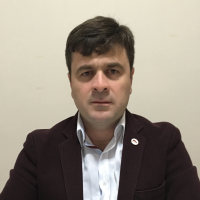
Professor of Pediatrics University of Diyala ,college of medicine , & consultant pediatrician at Al-Batool Teaching Hospital for Obstetrics, Gynecology & Pediatrics , Diyala. Iraq
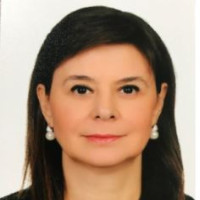
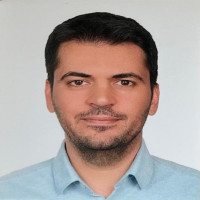
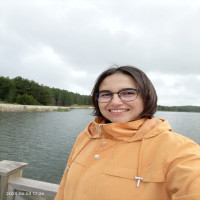
am involved since my early medical study in basic and clinical research in the field of sexual medicine. Particularly, my interest is focused on andrology and reconstructive genital surgery.
After the graduation, I completed the urology training in Turin (Molinette Hospital). In 2015 I have been trained as a clinical fellow at St.Peter's Andrology Center and The Institute of Urology - University College of London Hospital (UCLH) in London (UK). I had a full training in microsurgery, developing my surgical skills to perform penile reconstruction techniques (phalloplasty) in both gender and genetic male patients.
I developed a wide clinical and surgical experience in the treatment of Peyonie’s disease. I am involved in many research groups (Xiapex-Sliding technique).
I am currently a PhD fellow at the Unversity of Turin (Italy) developing a clinical project aiming to perform a penile transplant.
I am also a member of the panel of Sexual and Reprodxutive health European Association of Urology guidelines
My scientific profile is internationally acknowledged, as demonstrated by numerous contributions to international congresses and scientific publications in high profile peer-reviewed journals.
ETHICAL EDITOR | ETİK EDİTÖRÜ
STATISTICS EDITOR | İSTATİSTİK EDİTÖRÜ
SECTION EDITORS | BÖLÜM EDİTÖRLERİ
Social Media Editor

The Journal of General Medicine is licensed under a Creative Commons Attribution-NonCommercial 4.0 International License (CC BY NC).